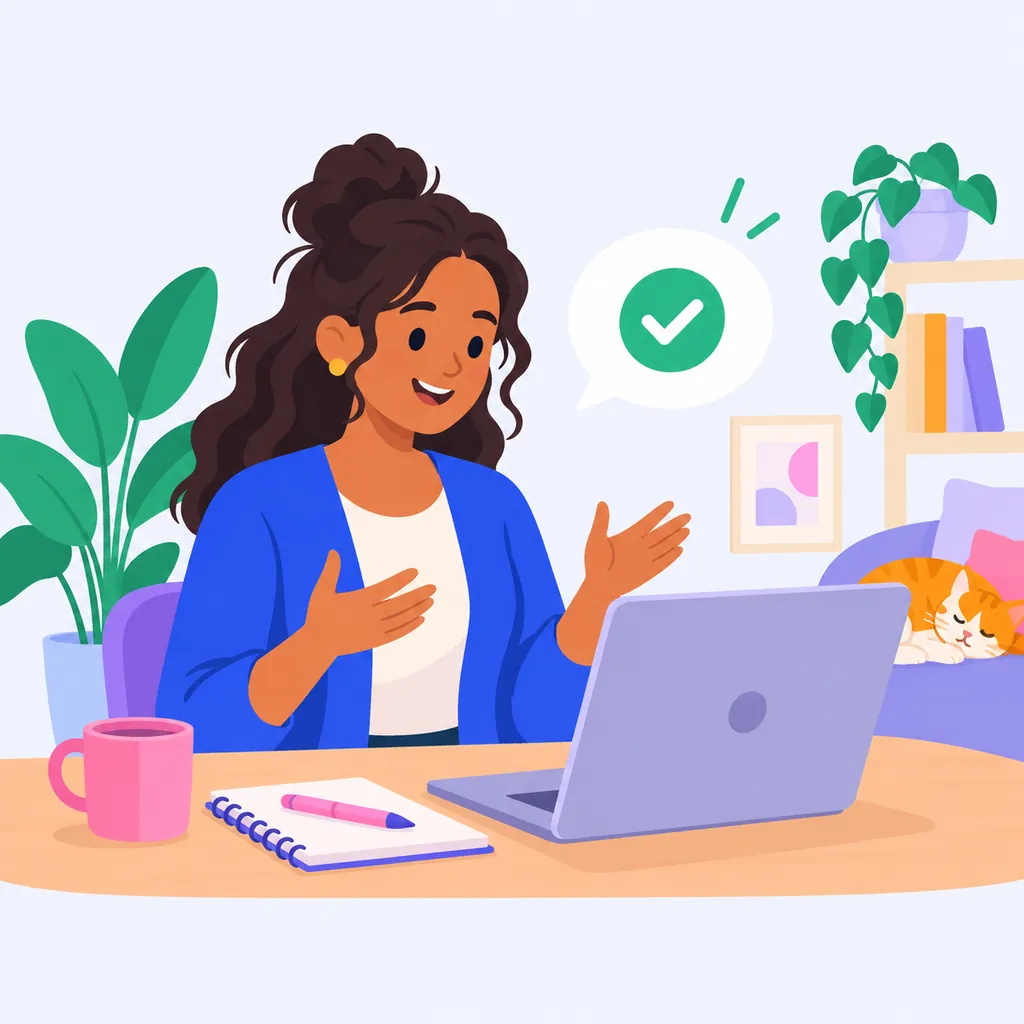
Mock Interview Tips: How to Practice So the Real Interview Feels Easy
The best job candidates aren't the most qualified — they're the most prepared. And the single most effective way to prepare for an interview is to practice one. A mock interview simulates the real experience: the questions, the pressure, the thinking-on-your-feet. Yet most people skip this step entirely and wonder why they freeze when it counts. Here's how to practice mock interviews so effectively that the real thing feels like a repeat.
Why Mock Interviews Work
Mock interviews work for the same reason flight simulators work for pilots: they expose you to realistic conditions without real consequences.
Research from the University of Chicago found that people who practiced under simulated pressure performed 20% better under real pressure than those who only studied the material. Your brain doesn't fully distinguish between a realistic simulation and the real thing — so the confidence you build in practice transfers directly.
Specifically, mock interviews help you:
- Hear yourself answer out loud — Thinking an answer and speaking an answer are completely different
- Identify weak spots — Discover which questions trip you up before it matters
- Build muscle memory — Repeat your best answers until they're automatic
- Manage nerves — Exposure to interview-like pressure reduces anxiety over time
- Refine delivery — It's not just what you say, but how you say it
“"You don't rise to the level of your hopes. You fall to the level of your preparation."
How to Run an Effective Mock Interview
Not all mock interviews are created equal. Here's how to get maximum value:
1Step 1: Research the Real Interview Format
Before practicing, learn what to expect. Is it behavioral? Technical? Panel? Case-based? Check Glassdoor for company-specific interview questions. Your mock interview should mirror the real format as closely as possible.
2Step 2: Prepare Your Core Stories
Most behavioral interviews use variations of the same themes: leadership, conflict resolution, teamwork, problem-solving, and failure. Prepare 5-7 stories using the STAR method (Situation, Task, Action, Result) that can be adapted to different questions. These stories are your Swiss Army knife.
3Step 3: Simulate Real Conditions
Don't practice in pajamas on your couch. Dress as you would for the real interview. Sit at a desk or table. If it's a video interview, turn on your camera. Use SayNow AI to simulate the interview scenario with realistic question flow — the AI asks follow-up questions based on your answers, just like a real interviewer would.
4Step 4: Record Everything
Record your mock interview (video if possible, audio at minimum). You'll discover things you never noticed: filler words, nervous habits, unclear explanations, and moments where you sold yourself short. It's uncomfortable to watch, but it's the fastest path to improvement.
5Step 5: Review and Iterate
After each practice round, identify: (1) Your strongest answer — keep it, (2) Your weakest answer — rewrite and re-practice it, (3) One delivery improvement — slower pace, better eye contact, fewer fillers. Then do another round focusing on the improvements. Three rounds of practice with iteration beats ten rounds without reflection.
The 10 Questions You Must Practice
These questions appear in nearly every interview. Practice all ten until your answers feel natural:
1. "Tell me about yourself." — Your elevator pitch. 60-90 seconds max.
2. "Why do you want to work here?" — Show you researched the company. Connect their mission to your experience.
3. "What's your greatest strength?" — Pick one relevant strength with a specific example.
4. "What's your greatest weakness?" — Name a real weakness and explain how you're actively improving it.
5. "Tell me about a time you faced a challenge." — STAR method. Focus on what YOU did, not the team.
6. "Where do you see yourself in 5 years?" — Show ambition aligned with the company's growth.
7. "Why are you leaving your current role?" — Stay positive. Focus on what you're moving toward, not away from.
8. "Tell me about a time you worked with a difficult person." — Show emotional intelligence and conflict resolution.
9. "What questions do you have for us?" — Always have 2-3 thoughtful questions. Never say "No, I'm good."
10. "Why should we hire you?" — Summarize your unique value in 3 sentences.
Practice each question at least 3 times. Use SayNow AI's interview simulation mode to get feedback on your answers and delivery.
Mock Interview Practice Methods, Compared
With a friend: Good for casual practice, but friends give vague feedback and can't simulate real interviewer behavior. Best for: getting comfortable speaking your answers out loud.
With a career counselor: Professional feedback, but limited availability (usually 1-2 sessions). Best for: polishing your final version before the real interview.
With AI (SayNow AI): Available 24/7, simulates realistic scenarios, provides specific feedback on delivery and content, and you can practice the same interview 10 times in one evening. Best for: high-volume practice and building muscle memory.
Self-recording: Good for identifying habits, but no interactive element. Best for: reviewing your body language and vocal delivery.
Optimal combination: Use AI coaching for daily practice (5-10 minutes), do 1-2 sessions with a friend or counselor for human feedback, and record at least one full run-through to review.
“"The candidate who practiced their answers 30 times will always outperform the candidate who 'thought about' their answers once."
Day-Before Checklist
The night before your interview, run through this checklist:
✅ Practiced your "Tell me about yourself" answer until it's smooth
✅ Reviewed 5-7 STAR stories and can adapt them to different questions
✅ Researched the company's recent news, culture, and the role specifics
✅ Prepared 2-3 questions to ask the interviewer
✅ Done at least one full mock interview in the last 48 hours
✅ Outfit ready, technology tested (for virtual interviews)
✅ Printed resume copies (for in-person)
✅ Mapped out the route or tested the video platform
✅ Set an alarm with 30 minutes of buffer time
✅ Done a breathing exercise to manage pre-interview nerves
Start Practicing Now
Don't wait until the night before your interview to start practicing. Start now.
Open SayNow AI and run through one interview scenario. It takes 10 minutes, it's completely private, and you'll immediately know what to work on. Then practice again tomorrow, and the day after.
By the time your real interview arrives, you'll have answered these questions so many times that confidence is automatic — not forced.
The interview is a performance. And every great performance starts with rehearsal.
Related Articles
Ready to Transform Your Communication Skills?
Start your AI-powered speaking training journey today with SayNow AI.