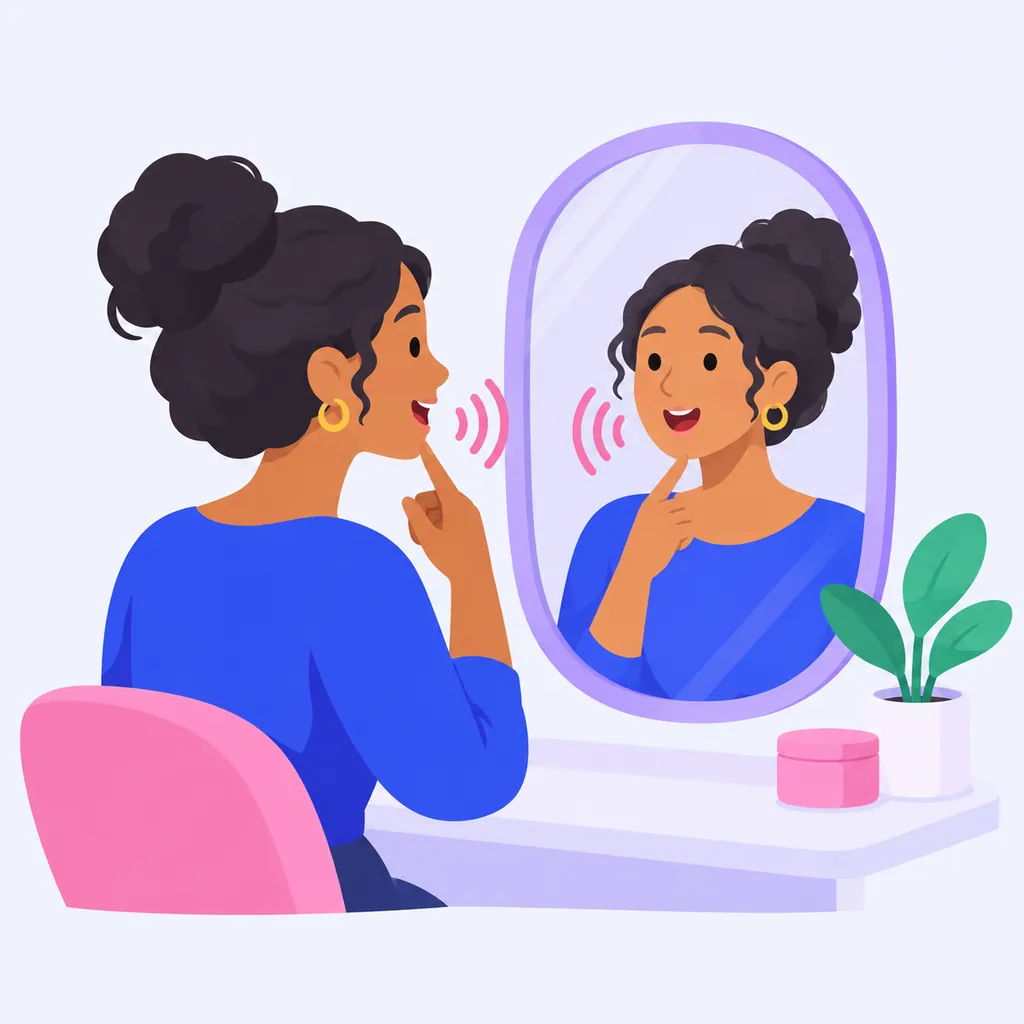
What elocution means
The word comes from the Latin elocutio. In classical rhetoric it referred to style, the choice of words. By the eighteenth and nineteenth centuries English speakers used it for delivery: voice, pronunciation and gesture, taught in “elocution lessons”. Today the term mostly means clear, well-paced, easy-to-follow speech.
Elocution is not about erasing an accent or sounding posh. A speaker with any accent can have good elocution if every word arrives intact and the voice carries the meaning. The test is practical: does a listener at the back of the room, or on a poor phone line, have to ask you to repeat yourself?
The components of elocution
| Component | What it is | What goes wrong |
|---|---|---|
| Articulation | How precisely the lips, tongue and jaw shape consonants and vowels | Mumbling; “gonna”, “dunno”, dropped word endings |
| Pronunciation | Saying a word with its accepted sounds and stress | Stress on the wrong syllable; guessing at names and technical terms |
| Pitch | How high or low the voice moves | A flat line, or a rise at the end of every statement |
| Pace | Speed, usually counted in words per minute | Racing when nervous; a slow drag when reading |
| Pauses | Silence placed on purpose | No pauses at all, or pauses filled with “um” |
| Volume and projection | How well the voice carries without shouting | Sentences that fade out in the last three words |
| Emphasis | The word you lean on in a sentence | Every word stressed equally, so nothing stands out |
Articulation and pronunciation are often confused. Articulation is physical: you can articulate a word crisply and still pronounce it wrongly. Pronunciation is knowledge: you can know how a word should sound and still slur it.
Elocution in practice
Read the two versions of the same update aloud and you will hear the difference.
Poor elocution
“Sowe’regonnaneedanothertwoweeksprobly, cozthevendorsnotdeliveredyet…” (one breath, no stress, the last words swallowed)
Good elocution
“We need two more weeks. [pause] The vendor has not delivered. [pause] I will confirm the new date on Friday.” (three short sentences, the key words landed, a full stop you can hear)
The content is identical. What changed is word endings, sentence length, pauses and where the stress falls. That is elocution doing its job, and it matters most on video calls, on the phone and in rooms with poor acoustics.
Elocution exercises to do aloud today
Ten minutes is enough. Do them standing, at full speaking volume.
Loosen the jaw and lips
Yawn widely twice. Then say “wah-wee-woo” ten times, exaggerating the mouth shape. A stiff jaw is the most common cause of mumbling.
Tongue twisters, slowly first
Say “Red lorry, yellow lorry” five times at half speed, hitting every consonant, then five times at normal speed. Follow with “Unique New York” and “She sells seashells by the seashore.” Accuracy comes before speed.
Finish every word
Read a paragraph from any article and over-pronounce the last consonant of each word: “nexT”, “weeK”, “askeD”. It will sound silly. Then read it again normally; some of the crispness stays.
Pencil drill
Hold a pencil lightly between your front teeth and read three sentences as clearly as you can. Remove it and repeat. Your tongue and lips work harder after the obstacle is gone.
One sentence, five meanings
Say “I never said she took the money” five times, stressing a different word each time. Notice how the meaning changes. This trains emphasis and pitch together.
Mark the pauses
Take a short text and draw a slash wherever there is a comma or full stop. Read it aloud and count “one” silently at each slash. Most people are surprised how long a one-second pause feels and how normal it sounds on a recording.
Record, listen, repeat once
Record sixty seconds of yourself explaining what you did yesterday. Listen for one thing only, such as dropped endings or pace, and record it again. One target per take.
Drills train the mouth. Conversation trains the habit
After the exercises, use the same clear delivery in a real exchange. In SayNow AI you choose a scenario, talk with an AI partner in real time, and receive a score with suggestions that include your fluency.
Free to download · iOS and Android
Common mistakes
Mistake
Speaking faster to sound fluent. Above about 160 words per minute, consonants start to collapse.
Do this instead
Keep the pace and shorten the sentences. Clarity reads as confidence.
Mistake
Over-enunciating in real conversation, so you sound like a recorded announcement.
Do this instead
Exaggerate in drills only. In conversation aim for clean word endings and nothing more.
Mistake
Practicing in a whisper because other people are at home.
Do this instead
Find a place where you can use your normal voice. Articulation changes with volume.
Mistake
Fixing everything at once.
Do this instead
Choose one component a week: endings this week, pauses next week.